Describing Sunflowers: A Guide to Adjectives
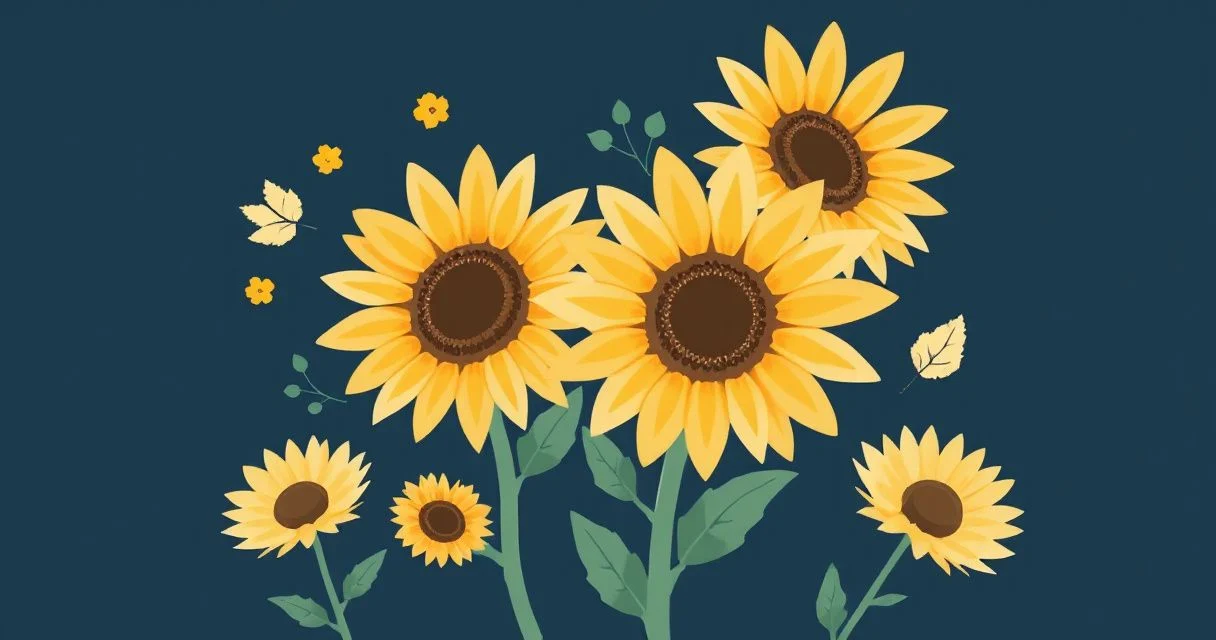
Sunflowers, with their bright yellow petals and towering height, are a captivating subject for writers and poets. But to truly capture their essence in words, a strong understanding of adjectives is essential. This article delves into the world of adjectives used to describe sunflowers, exploring their various types, structural rules, and common usage, providing you with the tools to paint vivid pictures with your language. Whether you’re a student learning grammar basics or a seasoned writer seeking to refine your descriptive skills, this comprehensive guide will help you master the art of using adjectives to describe these magnificent flowers.
Understanding how to effectively use adjectives not only enhances your writing but also improves your overall communication skills. By learning to choose the right words, you can convey precise meaning and create a stronger impact on your audience. This article will walk you through everything from basic definitions to advanced usage, ensuring you gain a thorough understanding of adjectives for sunflowers.
Table of Contents
- Definition of Adjectives
- Structural Breakdown of Adjective Use
- Types of Adjectives for Sunflowers
- Examples of Adjectives for Sunflowers
- Usage Rules for Adjectives
- Common Mistakes with Adjectives
- Practice Exercises
- Advanced Topics: Figurative Language
- Frequently Asked Questions
- Conclusion
Definition of Adjectives
An adjective is a word that modifies or describes a noun or pronoun. It provides more information about the noun, specifying its qualities, characteristics, or attributes. Adjectives answer questions like “What kind?”, “Which one?”, “How many?”, or “How much?” For example, in the phrase “tall sunflower,” the word “tall” is an adjective describing the noun “sunflower.”
Adjectives play a crucial role in adding detail and clarity to writing. Without adjectives, our descriptions would be bland and lack specificity. By carefully selecting adjectives, we can create vivid images and evoke emotions in the reader. They help to create imagery and provide more comprehensive details about the subject.
Structural Breakdown of Adjective Use
Adjectives typically appear before the noun they modify (attributive adjectives), but they can also follow a linking verb, such as “is,” “are,” “was,” “were,” “seem,” or “become” (predicative adjectives). Understanding this structural difference is key to using adjectives correctly.
Attributive adjectives directly precede the noun. For instance, “the yellow sunflower” is a classic example. The adjective “yellow” is placed immediately before the noun “sunflower,” describing its color. This is the most common placement for adjectives in English.
Predicative adjectives, on the other hand, follow a linking verb and describe the subject of the sentence. In the sentence “The sunflower is tall,” the adjective “tall” describes the sunflower but comes after the linking verb “is.” Predicative adjectives provide information about the subject’s state or condition.
Types of Adjectives for Sunflowers
There are several types of adjectives, each serving a different purpose in describing sunflowers or any other noun. Understanding these types will help you choose the most appropriate adjectives for your writing.
Descriptive Adjectives
Descriptive adjectives, also known as qualitative adjectives, describe the qualities or characteristics of a noun. They answer the question “What kind?” When describing sunflowers, these adjectives can refer to their color, size, shape, or any other observable attribute.
Examples of descriptive adjectives for sunflowers include: yellow, tall, large, bright, golden, drooping, heavy, vibrant, majestic, and beautiful.
Quantitative Adjectives
Quantitative adjectives indicate the quantity or amount of a noun. They answer the question “How many?” or “How much?” These adjectives are useful when specifying the number of sunflowers or their parts.
Examples of quantitative adjectives for sunflowers include: one, two, several, many, few, numerous, a lot of, some, and whole (as in “the whole field of sunflowers”).
Demonstrative Adjectives
Demonstrative adjectives indicate which noun is being referred to. The main demonstrative adjectives are this, that, these, and those. They specify whether the noun is near or far, singular or plural.
Examples of demonstrative adjectives for sunflowers include: This sunflower is the tallest. That sunflower is facing east. These sunflowers are ready to harvest. Those sunflowers are attracting bees.
Possessive Adjectives
Possessive adjectives show ownership or belonging. They indicate who or what possesses the noun. Common possessive adjectives include my, your, his, her, its, our, and their.
Examples of possessive adjectives for sunflowers include: My sunflower is the biggest in the garden. Her sunflower bloomed early. Its petals are a vibrant yellow. Our sunflowers are attracting many birds.
Interrogative Adjectives
Interrogative adjectives are used to ask questions about nouns. The main interrogative adjectives are which, what, and whose. They are always followed by a noun.
Examples of interrogative adjectives for sunflowers include: Which sunflower is your favorite? What sunflower variety is this? Whose sunflower won the competition?
Proper Adjectives
Proper adjectives are formed from proper nouns (names of specific people, places, or things). They describe something as being related to that proper noun. Proper adjectives are always capitalized.
Examples of proper adjectives for sunflowers include: Van Gogh’s sunflower paintings are famous. We visited the Ukrainian sunflower fields. The American sunflower seeds are high quality.
Compound Adjectives
Compound adjectives are formed by combining two or more words, often connected by a hyphen. They act as a single adjective to describe a noun.
Examples of compound adjectives for sunflowers include: sun-drenched sunflowers, record-breaking sunflower, yellow-petaled sunflower, wind-blown sunflower, late-blooming sunflower.
Examples of Adjectives for Sunflowers
To illustrate the use of various adjectives, here are several tables with example sentences. Each table focuses on a specific type of adjective and provides numerous examples to enhance your understanding.
The following table showcases descriptive adjectives used to describe sunflowers, highlighting their visual and physical attributes.
| Descriptive Adjective | Example Sentence |
|---|---|
| Yellow | The yellow sunflower stood out in the field. |
| Tall | A tall sunflower towered over the other plants. |
| Large | The large sunflower head was heavy with seeds. |
| Bright | The bright sunflower faced the sun all day. |
| Golden | The golden sunflower petals shimmered in the sunlight. |
| Drooping | The drooping sunflower needed water. |
| Heavy | The heavy sunflower head bent towards the ground. |
| Vibrant | The vibrant sunflower added color to the garden. |
| Majestic | The majestic sunflower stood tall and proud. |
| Beautiful | The beautiful sunflower was a joy to behold. |
| Fragrant | The fragrant sunflower attracted many bees. |
| Robust | A robust sunflower thrived in the sunny location. |
| Gigantic | The gigantic sunflower was the biggest one I had ever seen. |
| Miniature | The miniature sunflower was perfect for the small garden. |
| Round | The round sunflower head was full of seeds. |
| Rough | The rough sunflower stem felt sturdy. |
| Silky | The silky sunflower petals were soft to the touch. |
| Dwarf | The dwarf sunflower was perfect for container gardening. |
| Towering | The towering sunflower reached for the sky. |
| Lush | The lush sunflower foliage was a vibrant green. |
| Radiant | The radiant sunflower brightened up the whole field. |
| Pale | The pale sunflower petals indicated it needed more sunlight. |
| Dark | The dark sunflower center was a striking contrast to the petals. |
| Elegant | The elegant sunflower swayed gently in the breeze. |
| Wild | The wild sunflower grew freely in the meadow. |
This table demonstrates quantitative adjectives describing the number or amount of sunflowers.
| Quantitative Adjective | Example Sentence |
|---|---|
| One | One sunflower stood alone in the garden. |
| Two | Two sunflowers grew side by side. |
| Several | Several sunflowers were planted in the row. |
| Many | Many sunflowers covered the field. |
| Few | Few sunflowers survived the drought. |
| Numerous | Numerous sunflowers attracted bees and butterflies. |
| A lot of | A lot of sunflowers were harvested this year. |
| Some | Some sunflowers were taller than others. |
| Whole | The whole field of sunflowers was a beautiful sight. |
| Half | Half of the sunflowers had already bloomed. |
| All | All the sunflowers turned their faces to the sun. |
| Each | Each sunflower had its own unique characteristics. |
| Every | Every sunflower seed held the promise of new life. |
| More | We need more sunflowers in the garden next year. |
| Less | There was less sunflower oil produced this season. |
| Enough | We have enough sunflowers to fill the vase. |
| Several | Several sunflowers were damaged by the storm. |
| Double | We planted a double row of sunflowers this year. |
| Triple | The farmer harvested a triple yield of sunflowers. |
| Zero | There were zero sunflowers in the shade. |
| Thousands | Thousands of sunflowers stretched across the horizon. |
| Millions | Millions of sunflower seeds were harvested from the field. |
| Multiple | We planted multiple types of sunflowers in the garden. |
| Sufficient | There was a sufficient number of sunflowers for the festival. |
| Abundant | An abundant number of sunflowers grew in the field. |
The subsequent table provides examples of demonstrative and possessive adjectives, showing how they specify which sunflower is being discussed or who it belongs to.
| Adjective Type | Adjective | Example Sentence |
|---|---|---|
| Demonstrative | This | This sunflower is the tallest in the row. |
| That | That sunflower over there is facing east. | |
| These | These sunflowers are ready to be harvested. | |
| Those | Those sunflowers are attracting many bees. | |
| Possessive | My | My sunflower is the biggest in my garden. |
| Your | Your sunflower is blooming beautifully. | |
| His | His sunflower won the local competition. | |
| Her | Her sunflower is the first to bloom this year. | |
| Its | The sunflower waved its heavy head in the breeze. | |
| Our | Our sunflowers are attracting many birds. | |
| Their | Their sunflowers are the pride of the neighborhood. | |
| Possessive | John’s | John’s sunflower patch is the most beautiful in town. |
| Farmer’s | The farmer’s sunflower crop was bountiful this year. |
This table illustrates the usage of interrogative, proper, and compound adjectives, providing diverse examples of how these adjectives can be used to describe sunflowers.
| Adjective Type | Adjective | Example Sentence |
|---|---|---|
| Interrogative | Which | Which sunflower variety is the most resilient? |
| What | What sunflower species is native to this region? | |
| Whose | Whose sunflower grew the tallest this year? | |
| Proper | Ukrainian | The Ukrainian sunflower fields are vast and beautiful. |
| American | The American sunflower seeds are known for their size. | |
| Van Gogh’s | Van Gogh’s sunflower paintings are iconic. | |
| Compound | Sun-drenched | The sun-drenched sunflowers thrived in the hot weather. |
| Record-breaking | The record-breaking sunflower towered over the garden. | |
| Yellow-petaled | The yellow-petaled sunflowers were a cheerful sight. | |
| Wind-blown | The wind-blown sunflowers swayed in the breeze. | |
| Late-blooming | The late-blooming sunflower added color to the autumn garden. | |
| Compound | Open-pollinated | The farmer grew open-pollinated sunflowers for seed saving. |
| Self-seeding | The self-seeding sunflowers returned year after year. | |
| Drought-resistant | The drought-resistant sunflowers thrived in the arid climate. |
Usage Rules for Adjectives
Using adjectives correctly involves understanding their placement and agreement with the nouns they modify. Here are some key rules to follow:
- Placement: As mentioned earlier, adjectives usually come before the noun they modify (attributive adjectives) or after a linking verb (predicative adjectives).
- Order of Adjectives: When using multiple adjectives, there is a general order to follow: Opinion, Size, Age, Shape, Color, Origin, Material, Purpose. For example, “a beautiful large old round yellow Dutch wooden sunflower.”
- Coordination: When using two or more adjectives of equal rank, separate them with commas or use the conjunction “and.” For example, “a tall, yellow sunflower” or “a tall and yellow sunflower.”
- Articles: Use the appropriate article (a, an, the) depending on the noun and adjective. For example, “a tall sunflower” or “the tallest sunflower.”
- Hyphens: Use hyphens for compound adjectives that come before the noun. For example, “a sun-drenched sunflower.” However, do not use a hyphen when the compound adjective follows a linking verb. For example, “The sunflower is sun drenched.”
Understanding the order of adjectives can be challenging, but it’s essential for natural-sounding English. The order is typically: opinion, size, physical quality, shape, age, color, origin, material, and type. For example, you would say “a beautiful large old round yellow Dutch wooden ornamental sunflower.” While it’s rare to use so many adjectives at once, following this order will ensure clarity.
Common Mistakes with Adjectives
Several common mistakes can occur when using adjectives. Being aware of these errors can help you avoid them and improve your writing.
- Misplaced Adjectives: Placing an adjective in the wrong position can change the meaning of a sentence.
- Incorrect Order: Not following the correct order of adjectives can sound awkward.
- Overusing Adjectives: Using too many adjectives can make your writing cluttered and less effective.
- Incorrect Hyphenation: Failing to hyphenate compound adjectives correctly.
- Using Adjectives as Adverbs: Confusing adjectives with adverbs, especially after linking verbs.
Here are some examples of common mistakes and their corrections:
| Incorrect | Correct | Explanation |
|---|---|---|
| The sunflower tall grew in the garden. | The tall sunflower grew in the garden. | Adjective “tall” is misplaced. |
| A yellow old large sunflower. | A large old yellow sunflower. | Incorrect order of adjectives. |
| The sunflower was very, very, very beautiful. | The sunflower was exceptionally beautiful. | Overuse of adjectives. |
| A sun drenched field. | A sun-drenched field. | Missing hyphen in compound adjective. |
| The sunflower grew rapid. | The sunflower grew rapidly. | Using an adjective instead of an adverb. |
| The sunflower is brightly. | The sunflower is bright. | Using an adverb instead of an adjective after a linking verb. |
| Those sunflower is tall. | Those sunflowers are tall. | Mismatch in number between demonstrative adjective and noun. |
Practice Exercises
Test your understanding of adjectives with these practice exercises. Each exercise focuses on different aspects of adjective usage.
Exercise 1: Identifying Adjectives
Identify the adjectives in the following sentences.
| No. | Sentence | Answer |
|---|---|---|
| 1 | The tall sunflower swayed in the gentle breeze. | tall, gentle |
| 2 | The golden petals shimmered in the bright sunlight. | golden, bright |
| 3 | Several large sunflowers grew in the field. | Several, large |
| 4 | This beautiful sunflower is my favorite. | This, beautiful, favorite |
| 5 | Her sunflower won the local competition. | Her, local |
| 6 | Which sunflower variety is the most resilient? | Which, resilient, most |
| 7 | The sun-drenched sunflowers thrived in the heat. | sun-drenched |
| 8 | The record-breaking sunflower towered over the garden. | record-breaking |
| 9 | The yellow-petaled sunflowers were a cheerful sight. | yellow-petaled, cheerful |
| 10 | The late-blooming sunflower added color to the autumn garden. | late-blooming, autumn |
Exercise 2: Choosing the Correct Adjective
Fill in the blank with the most appropriate adjective from the options provided.
| No. | Sentence | Options | Answer |
|---|---|---|---|
| 1 | The _______ sunflower stood tall in the field. | (a) tall (b) taller (c) tallest | (a) tall |
| 2 | _______ sunflowers are ready to be harvested. | (a) This (b) That (c) These | (c) These |
| 3 | _______ sunflower is your favorite? | (a) Which (b) What (c) Whose | (a) Which |
| 4 | The _______ sunflower seeds are known for their size. | (a) Ukrainian (b) American (c) Dutch | (b) American |
| 5 | The sunflowers were _______ by the sun. | (a) sun-drenched (b) sun drenched (c) sundrenched | (a) sun-drenched |
| 6 | The _______ sunflower attracted many bees. | (a) fragrant (b) fragrance (c) fragrantly | (a) fragrant |
| 7 | We planted _______ sunflowers this year. | (a) many (b) much (c) more | (a) many |
| 8 | _______ sunflower is the tallest? | (a) Who’s (b) Whose (c) Which’s | (b) Whose |
| 9 | The _______ sunflower was a sight to behold. | (a) beauty (b) beautiful (c) beautifully | (b) beautiful |
| 10 | _______ sunflower paintings are world-renowned. | (a) Van Gogh (b) Van Gogh’s (c) Van Goghs’ | (b) Van Gogh’s |
Exercise 3: Correcting Mistakes with Adjectives
Identify and correct the mistakes in the following sentences.
| No. | Incorrect Sentence | Corrected Sentence |
|---|---|---|
| 1 | A yellow old large sunflower grew in the garden. | A large old yellow sunflower grew in the garden. |
| 2 | The sunflower is brightly. | The sunflower is bright. |
| 3 | Those sunflower is tall. | Those sunflowers are tall. |
| 4 | My sunflower grew rapid. | My sunflower grew rapidly. |
| 5 | We saw many beautiful sunflower. | We saw many beautiful sunflowers. |
| 6 | A sun drenched field of sunflowers. | A sun-drenched field of sunflowers. |
| 7 | The sunflower tallest stood out. | The tallest sunflower stood out. |
| 8 | This sunflowers are beautiful. | These sunflowers are beautiful. |
| 9 | What sunflower you like best? | Which sunflower do you like best? |
| 10 | Her sunflower it bloomed early. | Her sunflower bloomed early. |
Advanced Topics: Figurative Language
At an advanced level, adjectives can be used in figurative language to create more evocative and imaginative descriptions of sunflowers. Techniques like metaphor, simile, and personification can enrich your writing and provide deeper meaning.
- Metaphor: A metaphor compares two unlike things without using “like” or “as.” For example, “The sunflower is a golden crown in the field.”
- Simile: A simile compares two unlike things using “like” or “as.” For example, “The sunflower stood tall, like a beacon in the field.”
- Personification: Personification gives human qualities to non-human things. For example, “The sunflower bowed its head in the evening sun.”
Using these techniques can transform simple descriptions into powerful imagery. For instance, instead of merely saying “the sunflower is tall,” you could write “the sunflower, a verdant giant, watched over the smaller blooms, its face a sun-kissed shield against the endless sky.” Such descriptive power is what separates good writing from great writing.
Frequently Asked Questions
Here are some frequently asked questions about using adjectives for sunflowers, along with detailed answers to help clarify any remaining doubts.
- What is the difference between an attributive and a predicative adjective?
An attributive adjective comes before the noun it modifies (e.g., “the tall sunflower”). A predicative adjective follows a linking verb and describes the subject (e.g., “The sunflower is tall“).
- How do I determine the correct order of adjectives when using multiple adjectives?
Follow the general order: Opinion, Size, Age, Shape, Color, Origin, Material, Purpose. For instance, “a beautiful large old round yellow Dutch wooden sunflower.”
- What are some common mistakes to avoid when using adjectives?
Avoid misplacing adjectives, using the incorrect order, overusing adjectives, incorrectly hyphenating compound adjectives, and confusing adjectives with adverbs.
- How can I use adjectives to create more vivid descriptions of sunflowers?
Use descriptive adjectives that appeal to the senses (sight, smell, touch). Also, incorporate figurative language like metaphors, similes, and personification.
- What is a compound adjective, and how do I use it correctly?
A compound adjective is formed by combining two or more words, often with a hyphen (e.g., “sun-drenched”). Use a hyphen when the compound adjective comes before the noun, but not after a linking verb.
- Can a noun ever act as an adjective?
Yes, a noun can act as an adjective, also known as a noun adjunct. For example, in “sunflower seeds,” the noun “sunflower” modifies the noun “seeds.”
- How do I choose between using a comparative and superlative adjective?
Use a comparative adjective (ending in -er or using “more”) to compare two things (e.g., “This sunflower is taller than that one”). Use a superlative adjective (ending in -est or using “most”) to compare three or more things (e.g., “This is the tallest sunflower in the field”).
- What is the difference between qualitative and quantitative adjectives?
Qualitative adjectives describe the qualities or characteristics of a noun (e.g., yellow, tall). Quantitative adjectives indicate the quantity or amount of a noun (e.g., one, many).
Conclusion
Mastering the use of adjectives is crucial for creating vivid and precise descriptions, especially when writing about subjects as visually striking as sunflowers. By understanding the different types of adjectives, their structural rules, and common mistakes to avoid, you can significantly enhance your writing skills and communicate more effectively.
Remember to practice regularly, pay attention to the order of adjectives, and experiment with figurative language to add depth and creativity to your descriptions. With dedication and attention to detail, you can cultivate a rich vocabulary of adjectives and use them to paint captivating word pictures of sunflowers and much more.
Continue to explore the nuances of English grammar, and you’ll find that your ability to express yourself grows exponentially. Keep writing, keep learning, and keep blooming!
Checked against Merriam-Webster, the Chicago Manual of Style and the AP Stylebook. Spotted an error? Tell us — see our editorial policy.