Describing Dragons: A Comprehensive Guide to Dragon Adjectives
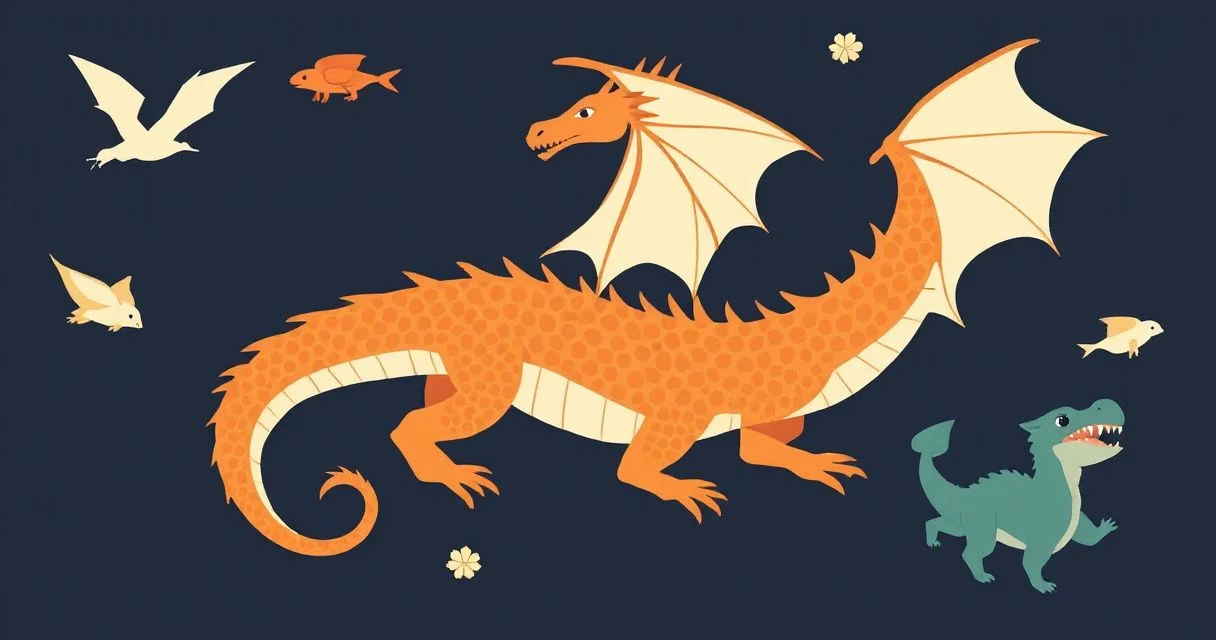
Dragons, mythical creatures of immense power and majesty, have captivated imaginations for centuries. Whether they are benevolent guardians or fearsome destroyers, the words we use to describe them shape our understanding and perception of these legendary beings. Mastering adjectives for dragons allows us to paint vivid, detailed pictures, enriching our storytelling and enhancing our comprehension of the rich lore surrounding them. This article provides a comprehensive exploration of adjectives used to describe dragons, covering their types, usage, and common mistakes. It is designed for English language learners, writers, and anyone fascinated by the art of descriptive language.
This guide will equip you with the vocabulary and grammatical knowledge to effectively describe dragons in all their diverse and wondrous forms, enabling you to bring these mythical creatures to life with your words.
Table of Contents
- Definition of Adjectives and Their Role in Describing Dragons
- Structural Breakdown: Adjective Placement and Modification
- Types of Adjectives for Describing Dragons
- Examples of Adjectives Describing Dragons
- Usage Rules for Dragon Adjectives
- Common Mistakes When Using Dragon Adjectives
- Practice Exercises
- Advanced Topics: Figurative Language and Dragon Adjectives
- Frequently Asked Questions
- Conclusion
Definition of Adjectives and Their Role in Describing Dragons
An adjective is a word that modifies a noun or pronoun, providing more information about its characteristics, qualities, or features. Adjectives answer questions like “What kind?”, “Which one?”, “How many?”, or “How much?” They play a crucial role in descriptive writing, allowing us to create vivid and detailed images in the reader’s mind.
When describing dragons, adjectives are essential for differentiating between various types and portraying their unique attributes. For instance, saying “a dragon” is vague, but saying “a ferocious dragon” immediately conveys a sense of danger and power. Adjectives bring dragons to life, making them more than just mythical creatures; they become characters with distinct personalities and appearances.
Structural Breakdown: Adjective Placement and Modification
In English, adjectives typically appear before the noun they modify. This is known as the attributive position. For example:
- Scaly dragon
- Ancient dragon
- Fire-breathing dragon
Adjectives can also appear after a linking verb such as “is,” “are,” “was,” “were,” “seems,” or “becomes.” This is known as the predicative position. For example:
- The dragon is powerful.
- The dragon seems ancient.
- The dragon became enraged.
Adjectives can be modified by adverbs, which add further detail and intensity. For example:
- Extremely powerful dragon
- Incredibly ancient dragon
- Particularly ferocious dragon
Types of Adjectives for Describing Dragons
Adjectives for describing dragons can be categorized based on the specific aspects they highlight. Here are some key categories:
Physical Appearance
These adjectives describe the dragon’s physical features, such as its scales, wings, claws, and overall build.
Temperament and Personality
These adjectives describe the dragon’s behavior, attitude, and emotional state.
Elemental Affiliations
These adjectives describe the dragon’s association with specific elements, such as fire, water, earth, or air.
Size and Scale
These adjectives describe the dragon’s physical dimensions, from small and nimble to enormous and imposing.
Age and Maturity
These adjectives describe the dragon’s age and stage of life, from young hatchlings to ancient wyrms.
Color and Pattern
These adjectives describe the dragon’s coloration and any distinctive patterns on its scales or hide.
Examples of Adjectives Describing Dragons
Here are some examples of adjectives used to describe dragons, organized by category.
Physical Appearance Examples
The following table provides examples of adjectives that describe the physical appearance of dragons.
| Adjective | Example Sentence |
|---|---|
| Scaly | The scaly dragon shimmered in the sunlight. |
| Winged | The winged beast soared through the sky. |
| Clawed | The clawed feet gripped the rocky crag. |
| Horned | The horned head was crowned with spikes. |
| Armored | The armored hide deflected the knight’s blow. |
| Spiked | A spiked tail lashed out, shattering stone. |
| Toothed | The toothed maw opened in a terrifying roar. |
| Muscular | The muscular neck supported a massive head. |
| Sleek | The sleek dragon moved with surprising grace. |
| Bulky | The bulky frame lumbered across the landscape. |
| Bony | The bony wings stretched taut in the wind. |
| Imposing | Its imposing figure filled the cave entrance. |
| Formidable | The dragon was a formidable opponent. |
| Powerful | Its powerful wings generated gusts of wind. |
| Sturdy | The dragon had a sturdy build. |
| Rough | Its rough scales felt like stone. |
| Smooth | The smooth underbelly was surprisingly soft. |
| Sharp | Its sharp claws could tear through steel. |
| Jagged | The jagged teeth were stained with blood. |
| Gnarled | The gnarled claws were a testament to its age. |
| Colossal | A colossal dragon emerged from the mountain. |
| Immense | The dragon’s immense size dwarfed the castle. |
| Vibrant | The dragon’s vibrant scales shimmered in the sunlight. |
| Glistening | Its glistening scales reflected the firelight. |
| Worn | The worn scales told tales of countless battles. |
| Tough | The dragon’s tough hide protected it from harm. |
Temperament and Personality Examples
The following table provides examples of adjectives that describe the temperament and personality of dragons.
| Adjective | Example Sentence |
|---|---|
| Fierce | The fierce dragon guarded its hoard jealously. |
| Wise | The wise dragon offered cryptic advice. |
| Greedy | The greedy dragon coveted gold and jewels. |
| Vengeful | The vengeful dragon sought retribution. |
| Benevolent | The benevolent dragon protected the village. |
| Cruel | The cruel dragon delighted in tormenting its victims. |
| Noble | The noble dragon followed a strict code of honor. |
| Cunning | The cunning dragon devised elaborate traps. |
| Enraged | The enraged dragon unleashed its fiery breath. |
| Playful | The playful dragon chased butterflies in the meadow. |
| Solitary | The solitary dragon preferred its own company. |
| Territorial | The territorial dragon defended its domain fiercely. |
| Mysterious | The mysterious dragon spoke in riddles. |
| Gentle | The gentle dragon allowed children to ride on its back. |
| Proud | The proud dragon held its head high. |
| Arrogant | The arrogant dragon looked down on mortals. |
| Wrathful | The wrathful dragon destroyed entire cities. |
| Calm | The calm dragon meditated in its cave. |
| Patient | The patient dragon waited for the opportune moment. |
| Impulsive | The impulsive dragon acted without thinking. |
| Wise | The wise dragon offered guidance to the lost travelers. |
| Malicious | The malicious dragon plotted the downfall of the kingdom. |
| Protective | The protective dragon fiercely guarded its young. |
| Resentful | The resentful dragon harbored grudges for centuries. |
| Ruthless | The ruthless dragon showed no mercy to its enemies. |
| Vigilant | The vigilant dragon always watched for danger. |
Elemental Affiliations Examples
The following table provides examples of adjectives that describe the elemental affiliations of dragons.
| Adjective | Example Sentence |
|---|---|
| Fire | The fire dragon breathed scorching flames. |
| Water | The water dragon controlled the ocean currents. |
| Earth | The earth dragon commanded the mountains and valleys. |
| Air | The air dragon summoned powerful storms. |
| Ice | The ice dragon froze its enemies solid. |
| Lightning | The lightning dragon crackled with electric energy. |
| Shadow | The shadow dragon lurked in the darkness. |
| Light | The light dragon radiated warmth and hope. |
| Magma | The magma dragon spewed molten rock. |
| Storm | The storm dragon controlled the weather. |
| Frost | The frost dragon left trails of ice wherever it went. |
| Solar | The solar dragon glowed with the power of the sun. |
| Lunar | The lunar dragon drew power from the moon. |
| Poison | The poison dragon secreted deadly toxins. |
| Acid | The acid dragon dissolved anything it touched. |
| Crystal | The crystal dragon’s scales sparkled like gems. |
| Sand | The sand dragon blended seamlessly with the desert. |
| Metal | The metal dragon’s scales were as strong as steel. |
| Wood | The wood dragon commanded the forests. |
| Nature | The nature dragon protected the balance of the ecosystem. |
| Volcanic | The volcanic dragon dwelled in the heart of the volcano. |
| Tidal | The tidal dragon controlled the ebb and flow of the sea. |
| Electric | The electric dragon charged the air with static. |
| Mystic | The mystic dragon possessed arcane knowledge. |
| Celestial | The celestial dragon guarded the gates of heaven. |
Size and Scale Examples
The following table provides examples of adjectives that describe the size and scale of dragons.
| Adjective | Example Sentence |
|---|---|
| Giant | The giant dragon dwarfed the mountains. |
| Tiny | The tiny dragon fit in the palm of a hand. |
| Enormous | The enormous dragon cast a long shadow. |
| Small | The small dragon was easily overlooked. |
| Colossal | The colossal dragon shook the ground with its footsteps. |
| Miniature | The miniature dragon was a popular pet among mages. |
| Massive | The massive dragon could crush castles with ease. |
| Petite | The petite dragon zipped through the air. |
| Immense | The immense dragon’s wings blotted out the sun. |
| Diminutive | The diminutive dragon hid among the flowers. |
| Vast | The vast dragon stretched across the horizon. |
| Compact | The compact dragon was surprisingly strong. |
| Gigantic | The gigantic dragon was a legend come to life. |
| Minute | The minute dragon was barely visible to the naked eye. |
| Towering | The towering dragon stood taller than the tallest trees. |
| Lilliputian | The lilliputian dragon could be carried in a pocket. |
| Grand | The grand dragon commanded respect from all creatures. |
| Scrawny | The scrawny dragon struggled to fly. |
| Substantial | The substantial dragon was a force to be reckoned with. |
| Featherweight | The featherweight dragon was surprisingly agile. |
Age and Maturity Examples
The following table provides examples of adjectives that describe the age and maturity of dragons.
| Adjective | Example Sentence |
|---|---|
| Ancient | The ancient dragon had seen empires rise and fall. |
| Young | The young dragon was still learning to control its powers. |
| Old | The old dragon was wise and experienced. |
| Hatchling | The hatchling dragon was fragile and vulnerable. |
| Mature | The mature dragon was at the peak of its strength. |
| Infant | The infant dragon stumbled around its cave. |
| Elder | The elder dragon was revered for its wisdom. |
| Adolescent | The adolescent dragon was rebellious and headstrong. |
| Primeval | The primeval dragon was a relic of a forgotten age. |
| Juvenile | The juvenile dragon was curious and adventurous. |
| Venerable | The venerable dragon was respected by all. |
| Fledgling | The fledgling dragon took its first clumsy flight. |
| Timeless | The timeless dragon seemed to exist outside of time. |
| Newborn | The newborn dragon chirped weakly. |
| Aged | The aged dragon’s scales were cracked and worn. |
| Callow | The callow dragon made many mistakes. |
| Seasoned | The seasoned dragon had battled countless foes. |
| Nascent | The nascent dragon’s powers were just beginning to develop. |
| Established | The established dragon ruled its territory with authority. |
| Long-lived | The long-lived dragon had witnessed the rise and fall of many civilizations. |
Color and Pattern Examples
The following table provides examples of adjectives that describe the color and pattern of dragons.
| Adjective | Example Sentence |
|---|---|
| Red | The red dragon breathed fire and destruction. |
| Blue | The blue dragon controlled the oceans. |
| Green | The green dragon guarded the forests. |
| Black | The black dragon lurked in the shadows. |
| Gold | The gold dragon was a symbol of royalty. |
| Silver | The silver dragon shimmered in the moonlight. |
| Bronze | The bronze dragon was a fierce warrior. |
| White | The white dragon controlled the ice and snow. |
| Purple | The purple dragon was a master of magic. |
| Crimson | The crimson dragon’s scales were stained with blood. |
| Azure | The azure dragon soared through the clear sky. |
| Emerald | The emerald dragon’s eyes glittered with intelligence. |
| Ebony | The ebony dragon was a creature of pure darkness. |
| Scarlet | The scarlet dragon breathed flames of intense heat. |
| Indigo | The indigo dragon was a mysterious and enigmatic creature. |
| Striped | The striped dragon blended into the jungle foliage. |
| Spotted | The spotted dragon was camouflaged against the rocky terrain. |
| Mottled | The mottled dragon’s scales were a patchwork of colors. |
| Speckled | The speckled dragon’s hide resembled the night sky. |
| Iridescent | The iridescent dragon’s scales shimmered with rainbow colors. |
| Opaline | The opaline dragon’s scales glowed with an inner light. |
| Marbled | The marbled dragon’s scales resembled polished stone. |
| Brindled | The brindled dragon’s scales were a mix of brown and black. |
| Calico | The calico dragon was a rare and beautiful sight. |
| Pied | The pied dragon was a mix of black and white. |
Usage Rules for Dragon Adjectives
Using adjectives correctly is crucial for clear and effective communication. Here are some key rules to keep in mind when describing dragons:
Adjective Order
When using multiple adjectives before a noun, there is a general order to follow, although it’s not a rigid rule. A common mnemonic is DOSASCOMP:
- Determiner (a, the, this, etc.)
- Opinion (beautiful, ugly, interesting)
- Size (large, small, tiny)
- Age (old, young, ancient)
- Shape (round, square, rectangular)
- Color (red, blue, green)
- Origin (English, French, dragon)
- Material (wooden, metal, stone)
- Purpose (riding, sleeping, cooking)
For example:
- A beautiful, large, ancient, red dragon.
- The fierce, small, young, green dragon.
Comparative and Superlative Forms
Adjectives can be used to compare two or more nouns. Comparative adjectives compare two things, while superlative adjectives compare three or more things.
- For most one-syllable adjectives, add “-er” for the comparative and “-est” for the superlative:
- Old: older, oldest
- Strong: stronger, strongest
- For most two-syllable adjectives ending in “-y,” change the “y” to “i” and add “-er” or “-est”:
- Scaly: scalier, scaliest
- For adjectives with three or more syllables, use “more” for the comparative and “most” for the superlative:
- Formidable: more formidable, most formidable
For example:
- This dragon is stronger than that one.
- That dragon is the strongest of them all.
- This dragon is more formidable than that one.
- That dragon is the most formidable dragon in the land.
Coordinate Adjectives
Coordinate adjectives are two or more adjectives that modify the same noun equally. They are separated by a comma. To determine if adjectives are coordinate, you can try adding “and” between them. If the sentence still makes sense, they are coordinate.
For example:
- The dragon was fierce, powerful. (The dragon was fierce and powerful.)
- The dragon had sharp, jagged teeth. (The dragon had sharp and jagged teeth.)
Common Mistakes When Using Dragon Adjectives
Even experienced English speakers can make mistakes when using adjectives. Here are some common errors to avoid:
| Incorrect | Correct | Explanation |
|---|---|---|
| A dragon old. | An old dragon. | Adjectives usually come before the noun in English. |
| The dragon is more scaly than. | The dragon is scalier than. | Use the correct comparative form for short adjectives. |
| The most ancientest dragon. | The most ancient dragon. | Avoid double superlatives (using “most” and “-est” together). |
| Fierce and powerful dragon. | Fierce, powerful dragon. | Separate coordinate adjectives with a comma. |
| A red, ancient dragon beautiful. | A beautiful, ancient, red dragon. | Follow the correct adjective order. |
| The dragon is very much ancient. | The dragon is very ancient. | Avoid unnecessary words between the adverb and adjective. |
| Dragon green. | Green dragon. | Adjective before noun. |
| The dragon fierce. | The fierce dragon. | Adjective before noun, use “the” for specificity. |
| A bigger ancient dragon. | A big, ancient dragon. | Separate adjectives, correct adjective order. |
Practice Exercises
Test your knowledge of dragon adjectives with these exercises.
Exercise 1: Fill in the Blanks
Fill in the blanks with appropriate adjectives to describe the dragon.
| Question | Answer |
|---|---|
| 1. The ______ dragon soared through the ____ sky. | 1. The majestic dragon soared through the azure sky. |
| 2. The ______ dragon guarded its ______ hoard of gold. | 2. The greedy dragon guarded its immense hoard of gold. |
| 3. The ______ dragon breathed ______ fire. | 3. The red dragon breathed scorching fire. |
| 4. The ______ dragon offered ______ advice to the hero. | 4. The wise dragon offered cryptic advice to the hero. |
| 5. The ______ dragon had ______ scales. | 5. The ancient dragon had worn scales. |
| 6. The _______ dragon lived in a ________ cave. | 6. The shadow dragon lived in a dark cave. |
| 7. The ______ dragon was known for its ______ temper. | 7. The fierce dragon was known for its fiery temper. |
| 8. The _______ dragon was the ________ of its kind. | 8. The noble dragon was the largest of its kind. |
| 9. The ______ dragon had a ______ tail. | 9. The spiked dragon had a powerful tail. |
| 10. The ______ dragon was ______ and feared by all. | 10. The enormous dragon was fearsome and feared by all. |
Exercise 2: Correct the Mistakes
Identify and correct the mistakes in the following sentences.
| Question | Answer |
|---|---|
| 1. The dragon old was wise. | 1. The old dragon was wise. |
| 2. A dragon scaly very. | 2. A very scaly dragon. |
| 3. The dragon is most scalier than the other. | 3. The dragon is scalier than the other. |
| 4. Fierce powerful dragon. | 4. Fierce, powerful dragon. |
| 5. The bigger ancientest dragon. | 5. The biggest, most ancient dragon. |
| 6. Red big dragon a. | 6. A big red dragon. |
| 7. Dragon very ancient the. | 7. The very ancient dragon. |
| 8. Wise and old dragon. | 8. Wise, old dragon. |
| 9. Dragon small a cute. | 9. A cute, small dragon. |
| 10. Dragon the most stronger. | 10. The strongest dragon. |
Exercise 3: Sentence Building
Create sentences using the following adjectives to describe a dragon: fierce, ancient, red, powerful, wise.
| Adjective | Example Sentence |
|---|---|
| Fierce | The fierce dragon guarded its treasure with unwavering resolve. |
| Ancient | The ancient dragon had witnessed the rise and fall of civilizations. |
| Red | The red dragon soared through the sky, leaving a trail of fire in its wake. |
| Powerful | The powerful dragon commanded the elements with ease. |
| Wise | The wise dragon offered cryptic advice to those who sought its counsel. |
| Fierce and powerful | The dragon was a fierce and powerful guardian of the ancient artifact. |
| Ancient and wise | The ancient and wise dragon was sought out for its knowledge of forgotten lore. |
| Red and fierce | The red and fierce dragon was a symbol of destruction and chaos. |
Advanced Topics: Figurative Language and Dragon Adjectives
Beyond literal descriptions, adjectives can be used figuratively to create more evocative and imaginative portrayals of dragons. Here are some techniques:
- Metaphor: Comparing a dragon to something else to emphasize a particular quality.
- Example: “The dragon’s roar was a thunderous wave, crashing over the battlefield.” (Comparing the roar to a wave to emphasize its power.)
- Simile: Using “like” or “as” to compare a dragon to something else.
- Example: “The dragon’s scales shimmered like a thousand emeralds.” (Comparing the scales to emeralds to emphasize their beauty.)
- Personification: Giving human qualities to a dragon.
- Example: “The cruel mountain scowled down at the village.” (Giving the mountain the human quality of scowling to emphasize its imposing nature.)
- Hyperbole: Exaggerating a quality for emphasis.
- Example: “The dragon’s hoard was infinitely vast, stretching beyond the horizon.” (Exaggerating the size of the hoard to emphasize its immensity.)
By using these figurative techniques, you can elevate your dragon descriptions from simple statements of fact to rich, imaginative expressions.
Frequently Asked Questions
What are some overused adjectives for dragons that I should try to avoid?
Some overused adjectives include “big,” “scary,” “powerful,” and “evil.” While these words are not inherently bad, they are common and can make your descriptions feel generic. Try to use more specific and evocative adjectives to create a unique impression.
How can I choose the best adjectives for a particular dragon?
Consider the dragon’s role in the story, its personality, its physical appearance, and its elemental affiliations. Choose adjectives that highlight these aspects and create a consistent and memorable image.
Is it okay to make up new adjectives to describe dragons?
Yes, you can absolutely create new adjectives, especially in fantasy writing! Just make sure the new word is clear in its meaning either through context or by combining existing word parts (prefixes, suffixes, and roots) in recognizable ways. Inventing a word that no one understands will not help your reader.
Where can I find more examples of dragon descriptions?
Read widely in fantasy literature, paying attention to how authors describe dragons. Also, explore online resources such as fantasy art websites, forums, and writing communities.
Can adjectives be subjective?
Yes, many adjectives, especially those describing opinions or feelings, are subjective. What one person considers “beautiful,” another might find “plain.” Be mindful of your perspective and the context in which you are using adjectives.
Conclusion
Mastering adjectives for dragons is a valuable skill for writers, English language learners, and anyone who enjoys descriptive language. By understanding the different types of adjectives, their usage rules, and common mistakes to avoid, you can create vivid and compelling portrayals of these magnificent creatures. Whether you’re crafting a fantasy novel, writing a poem, or simply describing a dragon in conversation, the right adjectives can bring your words to life and ignite the imagination.
So, go forth and describe dragons with confidence and creativity! Let your words soar on the wings of imagination, and may your dragons be forever memorable.
Checked against Merriam-Webster, the Chicago Manual of Style and the AP Stylebook. Spotted an error? Tell us — see our editorial policy.