
The Intensifiers That Make Writing Weaker
Very, really, quite, rather, somewhat. Most of them subtract force from the word they are attached to, and the good ones are the ones nobody notices.
How adjectives actually behave in a sentence — the order they fall into, how they compare, when they carry opinion rather than fact, and how to reach for a vivid word without overreaching. Guides for writing more precisely, rather than lists of words for one subject.
Topic · 251 guides
How adjectives actually behave in a sentence — the order they fall into, how they compare, when they carry opinion rather than fact, and how to reach for a vivid word without overreaching. Guides for writing more precisely, rather than lists of words for one subject.
Very, really, quite, rather, somewhat. Most of them subtract force from the word they are attached to, and the good ones are the ones nobody notices.
The distinction is worth observing and worth knowing the history of, because it was never a description of English. It was one man’s preference that stuck.
You can say a mere formality. You cannot say the formality is mere. A small group of adjectives refuses to move, and knowing which ones saves some very odd sentences.
“Walking through the door, the smell hit me.” The smell was not walking. English attaches an opening phrase to whatever comes next, whether you meant it to or not.
“Avoid the passive” is the most repeated writing rule in English, and the people repeating it frequently cannot identify one.
A cold, damp morning takes a comma. A dirty white shirt does not. There are two tests, they always agree, and neither takes longer than a second.
Chicken soup, bus stop, customer service improvement programme delivery framework. English lets nouns modify nouns, and it does not warn you when the stack gets too tall.
The people correcting this one have it backwards, and the reason why explains a whole category of verbs.
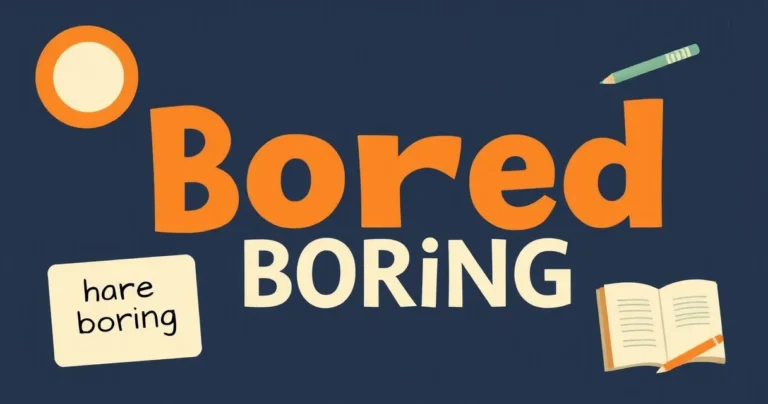
One ending describes how you feel. The other describes what caused it. Confusing them produces sentences that are grammatical and accidentally insulting.
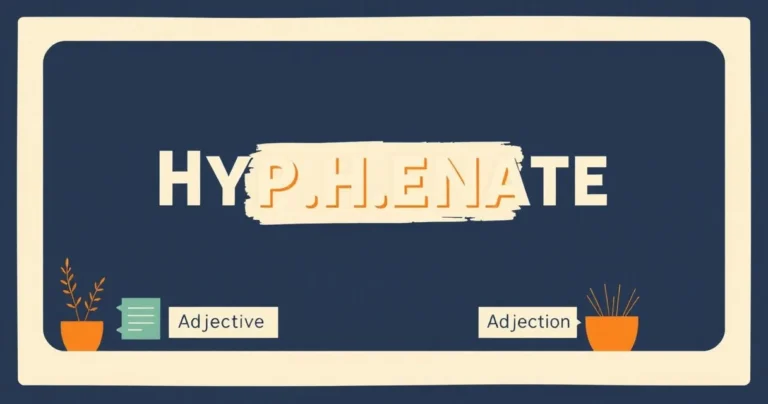
A small-business owner and a small business owner are different people. The hyphen is not decoration; it tells the reader which words go together.
Grammar Simplified
Plain-English grammar guides and curated adjective lists. Free to read, checked against Merriam-Webster, Chicago and AP before publication.
251 grammar guides →