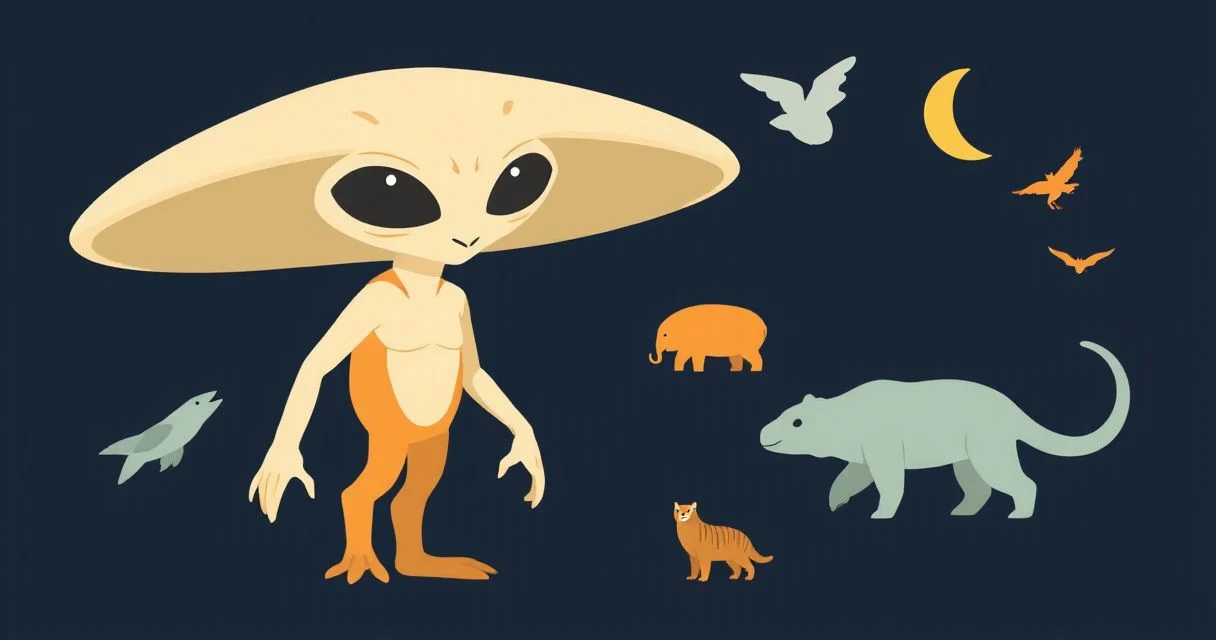
Describing Extraterrestrials: A Guide to Alien Adjectives
Understanding how to use adjectives to describe things is a fundamental part of learning English. But what if you needed to describe something… out of this world? This article delves into the fascinating realm of “adjectives for aliens,” providing a comprehensive guide to expanding your descriptive vocabulary. Whether you’re a science fiction writer, an English language learner, or simply curious about the possibilities of extraterrestrial life, this guide will equip you with the tools to vividly depict beings from other planets. Mastering these descriptive words will not only enhance your writing and speaking skills but also broaden your understanding of English grammar.
This article is designed for English language learners of all levels, science fiction enthusiasts, and anyone interested in exploring the descriptive power of adjectives. By the end of this guide, you’ll be able to confidently describe the appearance, personality, and environment of any alien creature you can imagine.
Table of Contents
- Definition of Adjectives for Aliens
- Structural Breakdown of Alien Adjectives
- Types and Categories of Adjectives for Aliens
- Examples of Adjectives for Aliens
- Usage Rules for Adjectives for Aliens
- Common Mistakes When Using Adjectives for Aliens
- Practice Exercises
- Advanced Topics in Alien Adjectives
- Frequently Asked Questions
- Conclusion
Definition of Adjectives for Aliens
Adjectives, in general, are words that describe or modify nouns. They provide details about the qualities, characteristics, or attributes of a noun. In the context of “adjectives for aliens,” these are adjectives specifically used to describe extraterrestrial beings, their cultures, their technologies, and their environments. These adjectives help us paint a vivid picture of the unknown, making alien concepts more understandable and relatable.
Adjectives for aliens function the same way as any other adjective in English grammar. They can appear before the noun they modify (attributive adjectives) or after a linking verb (predicative adjectives). The key difference lies in the specific vocabulary used to suggest alien or otherworldly qualities. These adjectives can be based on real-world concepts, combined with prefixes or suffixes to suggest unfamiliarity, or entirely invented to evoke a sense of the bizarre and unknown.
The context in which these adjectives are used is crucial. Science fiction literature, film, and games often rely heavily on adjectives to create immersive and believable alien worlds. Understanding the nuances of these adjectives allows for a richer and more engaging experience for the reader or viewer. For English learners, mastering these adjectives expands their vocabulary and improves their ability to express complex ideas.
Structural Breakdown of Alien Adjectives
The structure of adjectives for aliens doesn’t differ significantly from that of regular adjectives. They can be simple (e.g., tall, green), compound (e.g., laser-focused, three-eyed), or derived (e.g., intelligent, bioluminescent). The key lies in the choice of words and how they are combined to create a sense of alienness.
Many adjectives for aliens are formed by adding prefixes or suffixes to existing words. Common prefixes include bio- (related to life), cyber- (related to technology), exo- (outside), hyper- (beyond), meta- (beyond), nano- (extremely small), omni- (all), pseudo- (false), tele- (distant), and ultra- (extreme). Common suffixes include -oid (resembling), -ic (relating to), -al (relating to), -ian (relating to), -ar (relating to), and -esque (in the style of).
For example, bioluminescent combines the prefix bio- (life) with the root word luminescent (emitting light). Similarly, cybernetic combines cyber- (technology) with the suffix -ic (relating to). These prefixes and suffixes can be combined creatively to generate a vast array of adjectives suitable for describing alien beings and technologies.
Types and Categories of Adjectives for Aliens
Adjectives for aliens can be categorized based on the aspect they describe. Here are some common categories:
Adjectives Describing Appearance
These adjectives describe the physical characteristics of the alien beings, such as their size, shape, color, and texture.
Adjectives Describing Personality
These adjectives describe the temperament, behavior, and emotional characteristics of the alien beings.
Adjectives Describing Environment
These adjectives describe the alien’s native environment, including the landscape, climate, and atmosphere.
Adjectives Describing Abilities
These adjectives describe the unique powers, skills, and capabilities of the alien beings.
Examples of Adjectives for Aliens
Here are some examples of adjectives for aliens, categorized by type.
Table 1: Adjectives Describing Appearance
This table provides a wide range of adjectives used to depict the physical attributes of alien beings. These adjectives cover aspects like size, shape, color, texture, and specific physical features, offering a diverse vocabulary for describing extraterrestrial appearances.
| Adjective | Example Sentence |
|---|---|
| Amorphous | The amorphous blob shifted across the floor. |
| Bioluminescent | The bioluminescent scales glowed in the dark cave. |
| Chitinous | Its chitinous exoskeleton seemed impenetrable. |
| Crystalline | The crystalline being shimmered with reflected light. |
| Ethereal | An ethereal glow surrounded the alien form. |
| Gargantuan | The gargantuan creature dwarfed the spaceship. |
| Gelatinous | A gelatinous mass oozed from the crashed pod. |
| Iridescent | The iridescent wings fluttered silently. |
| Lanky | A lanky alien figure emerged from the shadows. |
| Mammalian | The mammalian alien had fur and warm blood. |
| Ovoid | An ovoid head sat atop its slender neck. |
| Reptilian | Its reptilian eyes scanned the surroundings. |
| Skeletal | A skeletal alien wandered through the ruins. |
| Slender | The slender alien moved with surprising speed. |
| Spiked | Spiked protrusions covered its back. |
| Tentacled | A tentacled monster lurked in the deep ocean. |
| Translucent | The translucent skin revealed internal organs. |
| Unearthly | Its unearthly beauty was both captivating and unsettling. |
| Vitreous | Vitreous eyes stared blankly ahead. |
| Winged | A winged alien soared through the alien sky. |
| Scaled | Its scaled hide shimmered under the twin suns. |
| Hulking | A hulking figure lumbered towards the settlement. |
| Diminutive | The diminutive aliens were surprisingly strong. |
| Angular | Its angular features were unlike anything on Earth. |
| Bulbous | Bulbous eyes gave it excellent night vision. |
| Segmented | Its segmented body allowed for great flexibility. |
| Spiny | A spiny tail lashed back and forth. |
| Striped | Striped patterns camouflaged it in the dense jungle. |
| Warped | Its warped form suggested genetic mutation. |
Table 2: Adjectives Describing Personality
This table focuses on adjectives that describe the personality and behavior of alien beings. The adjectives range from positive to negative characteristics, allowing for a nuanced portrayal of alien cultures and individual beings.
| Adjective | Example Sentence |
|---|---|
| Aggressive | The aggressive species attacked without warning. |
| Benevolent | The benevolent aliens shared their advanced technology. |
| Calculating | Its calculating gaze suggested a hidden agenda. |
| Deceptive | The deceptive alien lured them into a trap. |
| Enigmatic | The enigmatic alien refused to reveal its motives. |
| Fierce | A fierce warrior protected its tribe. |
| Gregarious | The gregarious aliens welcomed the newcomers. |
| Hostile | The hostile environment made survival difficult. |
| Inquisitive | An inquisitive mind drove the alien to explore. |
| Jealous | The jealous alien plotted revenge. |
| Kindred | They felt a kindred spirit in the alien’s compassion. |
| Loyal | The loyal companion stood by its friend. |
| Malicious | A malicious entity sought to corrupt the planet. |
| Noble | The noble leader sacrificed himself for his people. |
| Oppressive | An oppressive regime controlled the alien population. |
| Peaceful | The peaceful species sought only coexistence. |
| Quarrelsome | The quarrelsome aliens argued constantly. |
| Ruthless | A ruthless conqueror destroyed entire civilizations. |
| Stoic | The stoic alien showed no emotion. |
| Treacherous | The treacherous landscape hid many dangers. |
| Unforgiving | The unforgiving desert claimed many lives. |
| Vengeful | A vengeful spirit haunted the ancient ruins. |
| Wise | The wise elder offered guidance. |
| Xenophobic | The xenophobic species distrusted all outsiders. |
| Yielding | A yielding nature made them vulnerable. |
| Zealous | The zealous followers defended their beliefs. |
| Pensive | The pensive alien contemplated the mysteries of the universe. |
| Cautious | The cautious explorers proceeded with extreme care. |
| Courageous | A courageous hero faced overwhelming odds. |
Table 3: Adjectives Describing Environment
This table provides adjectives that describe the environments where aliens might live. These adjectives cover aspects such as climate, terrain, atmosphere, and the presence of unique phenomena, helping to create a sense of place and atmosphere in alien worlds.
| Adjective | Example Sentence |
|---|---|
| Acidic | The acidic rain corroded the metal structures. |
| Barren | The barren landscape stretched for miles. |
| Cavernous | Cavernous tunnels honeycombed the planet. |
| Desolate | The desolate plains were devoid of life. |
| Eerie | An eerie silence filled the empty city. |
| Frozen | The frozen wasteland was inhospitable. |
| Gaseous | A gaseous planet swirled with colorful clouds. |
| Humid | The humid atmosphere was thick with moisture. |
| Icy | The icy surface was treacherous to navigate. |
| Jagged | Jagged mountains pierced the sky. |
| Lush | The lush jungle teemed with life. |
| Metallic | A metallic sheen covered the ground. |
| Nocturnal | Nocturnal creatures emerged from their burrows. |
| Ominous | An ominous storm gathered on the horizon. |
| Polluted | The polluted air choked the inhabitants. |
| Radioactive | Radioactive fallout contaminated the area. |
| Sandy | The sandy desert stretched endlessly. |
| Toxic | The toxic fumes were deadly to breathe. |
| Volcanic | Volcanic eruptions shook the ground. |
| Windswept | The windswept plains were exposed to the elements. |
| Xeric | The xeric environment supported drought-resistant plants. |
| Yielding | The yielding soil made farming easy. |
| Zonal | Zonal climates created distinct ecosystems. |
| Planetary | The planetary rings shimmered in the starlight. |
| Asteroidal | The asteroidal belt was filled with debris. |
| Subterranean | Subterranean rivers flowed beneath the surface. |
| Celestial | Celestial bodies aligned in a rare event. |
| Cosmic | Cosmic radiation permeated the atmosphere. |
| Arboreal | Arboreal creatures lived in the giant trees. |
Table 4: Adjectives Describing Abilities
This table lists adjectives that describe the unique abilities and powers that alien beings might possess. These adjectives cover a range of capabilities, from physical and mental powers to technological and magical abilities, allowing for imaginative descriptions of alien strengths.
| Adjective | Example Sentence |
|---|---|
| Adaptive | The adaptive species could survive in any environment. |
| Biokinetic | The biokinetic alien could heal any wound. |
| Cybernetic | The cybernetic enhancements increased its strength. |
| Defensive | Its defensive shields protected it from attack. |
| Empathic | The empathic alien could sense others’ emotions. |
| Formidable | A formidable opponent stood in their way. |
| Gravity-defying | The gravity-defying technology allowed them to fly. |
| Healing | The healing powers restored the wounded soldier. |
| Invisible | The invisible alien moved undetected. |
| Jumping | The jumping alien leaped across the chasm. |
| Kinetic | The kinetic energy propelled the weapon. |
| Levitating | The levitating alien floated in the air. |
| Magical | The magical spells protected the kingdom. |
| Nigh-omnipotent | The nigh-omnipotent being controlled the universe. |
| Offensive | Its offensive capabilities were unmatched. |
| Powerful | A powerful force surged through the alien. |
| Quick | The quick alien dodged the laser blast. |
| Regenerative | Its regenerative abilities healed its injuries. |
| Stealthy | The stealthy alien infiltrated the base. |
| Telekinetic | The telekinetic alien moved objects with its mind. |
| Unstoppable | The unstoppable force advanced relentlessly. |
| Visionary | The visionary leader guided them to a new era. |
| Warping | The warping technology allowed interstellar travel. |
| X-ray | Its x-ray vision saw through walls. |
| Yielding | Its yielding body absorbed the impact. |
| Zenith | The zenith power was unleashed in the final battle. |
| Psionic | The psionic abilities allowed mind control. |
| Shapeshifting | The shapeshifting alien could mimic any form. |
| Time-bending | The time-bending technology altered history. |
Usage Rules for Adjectives for Aliens
The usage rules for adjectives describing aliens are the same as for any other adjective in English. They can be used in two main ways:
- Attributive Adjectives: These adjectives come before the noun they modify.
- Example: The bioluminescent alien glowed softly.
- Example: A gargantuan spaceship appeared in the sky.
- Predicative Adjectives: These adjectives follow a linking verb (such as be, seem, appear, become) and describe the subject of the sentence.
- Example: The alien was enigmatic.
- Example: The landscape seemed barren.
Adjectives can also be modified by adverbs to add more detail. For example: The alien was extremely intelligent or The environment was incredibly toxic.
When using multiple adjectives to describe an alien, the order generally follows this pattern: opinion, size, physical quality, shape, age, color, origin, material, type, and purpose. However, this is a general guideline, and the most important factor is clarity and flow.
For example: The strange, small, bioluminescent, ovoid alien creature.
Common Mistakes When Using Adjectives for Aliens
Here are some common mistakes to avoid when using adjectives for aliens:
- Incorrect Word Order: Placing adjectives in an unnatural order can make the sentence awkward.
- Incorrect: The green small alien.
- Correct: The small green alien.
- Misusing Prefixes and Suffixes: Adding prefixes or suffixes incorrectly can change the meaning of the word or create a nonsensical word.
- Incorrect: The bioing alien.
- Correct: The biological alien.
- Redundancy: Using adjectives that have similar meanings can make the description repetitive.
- Incorrect: The barren and desolate wasteland.
- Correct: The barren wasteland.
- Lack of Specificity: Using vague adjectives that don’t provide enough detail.
- Incorrect: The alien was good.
- Correct: The alien was benevolent.
Here are some more examples of incorrect and correct sentences using alien adjectives:
Table 5: Correct vs. Incorrect Examples
This table presents common errors in using adjectives to describe aliens, along with the corrected versions. It highlights mistakes in word order, prefix/suffix usage, redundancy, and lack of specificity, providing clear examples to help avoid these pitfalls.
| Incorrect | Correct |
|---|---|
| The big huge alien stood there. | The huge alien stood there. |
| The alien was intelligence. | The alien was intelligent. |
| A luminated bioluminescent creature. | A bioluminescent creature. |
| The environment was spacey. | The environment was cosmic. |
| The aggressing alien attacked. | The aggressive alien attacked. |
| The desert barren was vast. | The barren desert was vast. |
| An empath alien. | An empathic alien. |
| The power powerful was immense. | The powerful force was immense. |
| The form shape was amorphous. | The amorphous form was unsettling. |
| The planet toxic was dangerous. | The toxic planet was dangerous. |
| The creature scale was green. | The scaled creature was green. |
| The alien was very good. | The alien was benevolent. |
| The being mysterious was silent. | The mysterious being was silent. |
| The environment frozen was harsh. | The frozen environment was harsh. |
| The light bio was bright. | The biolight was bright. |
| The alien was adapt. | The alien was adaptive. |
| The alien’s mind telekinetic was strong. | The alien’s telekinetic mind was strong. |
| The landscape was eerie and spooky. | The landscape was eerie. |
| The sky gaseous was colorful. | The gaseous sky was colorful. |
| The alien’s ability heal was amazing. | The alien’s healing ability was amazing. |
Practice Exercises
Test your understanding of adjectives for aliens with these exercises.
Exercise 1: Fill in the Blanks
Complete the following sentences with appropriate adjectives from the list provided. Use each adjective only once.
Adjective List: bioluminescent, gargantuan, enigmatic, barren, telekinetic, aggressive, crystalline, toxic, ethereal, mammalian
Table 6: Practice Exercise 1
This table presents fill-in-the-blank exercises designed to test the understanding of adjectives for aliens. Each sentence requires the selection of an appropriate adjective from the provided list, reinforcing vocabulary and contextual usage.
| Question | Answer |
|---|---|
| 1. The ________ alien levitated objects with its mind. | telekinetic |
| 2. The ________ landscape offered no signs of life. | barren |
| 3. The ________ being seemed to float rather than walk. | ethereal |
| 4. The ________ species attacked without provocation. | aggressive |
| 5. The ________ creature glowed softly in the dark cave. | bioluminescent |
| 6. The ________ alien refused to reveal its true intentions. | enigmatic |
| 7. The ________ spaceship dwarfed the human colony. | gargantuan |
| 8. The ________ planet was uninhabitable due to its atmosphere. | toxic |
| 9. The ________ alien had fur and warm blood. | mammalian |
| 10. The ________ structure shimmered with refracted light. | crystalline |
Exercise 2: Sentence Building
Create a sentence using the following adjective-noun pairs.
Table 7: Practice Exercise 2
This table provides adjective-noun pairs for sentence-building exercises. Users are prompted to create sentences using the given pairs, enhancing their ability to use alien-related vocabulary in context.
| Adjective-Noun Pair | Example Sentence |
|---|---|
| Reptilian – eyes | Its reptilian eyes scanned the surroundings with cold precision. |
| Lush – jungle | The lush jungle teemed with strange and wondrous life forms. |
| Cybernetic – enhancements | The cybernetic enhancements granted the alien superhuman strength. |
| Ominous – presence | An ominous presence filled the ancient temple. |
| Powerful – abilities | The alien possessed powerful abilities that defied human understanding. |
| Winged – silhouette | A winged silhouette soared across the alien sky. |
| Slender – fingers | Slender fingers manipulated the complex machinery. |
| Nocturnal – creatures | Nocturnal creatures emerged from their hidden burrows. |
| Metallic – surface | The metallic surface reflected the harsh sunlight. |
| Vengeful – spirit | A vengeful spirit haunted the desolate planet. |
Exercise 3: Adjective Identification
Identify the adjectives in the following sentences and state what they describe.
Table 8: Practice Exercise 3
This table presents sentences for adjective identification exercises. Users are required to identify the adjectives in each sentence and specify what they describe, reinforcing their understanding of adjective usage.
| Sentence | Adjective(s) | Describes |
|---|---|---|
| The hostile alien environment was difficult to navigate. | hostile | environment |
| A wise elder offered guidance to the troubled species. | wise, troubled | elder, species |
| The translucent alien skin revealed internal organs. | translucent | skin |
| Aggressive actions led to total war. | Aggressive, total | actions, war |
| The gelatinous alien mass oozed from the spaceship. | gelatinous | mass |
| Their adaptive abilities were the key to survival. | adaptive | abilities |
| The crystalline structures shimmered and sparkled. | crystalline | structures |
| The frozen planet was a desolate wasteland. | frozen, desolate | planet, wasteland |
| The intelligent alien species created advanced technology. | intelligent, advanced | species, technology |
| The barren landscape stretched for miles. | barren | landscape |
Advanced Topics in Alien Adjectives
For advanced learners, consider these more complex aspects of using adjectives for aliens:
- Creating Neologisms: Inventing new words to describe truly unique alien concepts. This requires a strong understanding of morphology (word formation) and etymology (word origins).
- Figurative Language: Using metaphors, similes, and other figures of speech to create vivid and imaginative descriptions. For example, “The alien’s eyes were like molten gold.”
- Cultural Sensitivity: Being mindful of potential cultural biases when describing alien societies. Avoid stereotypes and strive for nuanced and respectful portrayals.
- Sensory Language: Incorporating adjectives that appeal to the senses (sight, hearing, smell, taste, touch) to create a more immersive experience for the reader. For example, “The air was thick with a pungent, metallic odor.”
Frequently Asked Questions
Here are some frequently asked questions about using adjectives for aliens:
- Can I make up my own adjectives for aliens?
Yes, absolutely! Creating neologisms (new words) is a common practice in science fiction. Just make sure the word is easily understood in context and follows some basic rules of English morphology.
- How do I choose the right adjective to describe an alien?
Consider the specific characteristics you want to emphasize. Think about the alien’s appearance, personality, environment, and abilities. Choose adjectives that accurately and vividly convey those characteristics.
- Is there a limit to how many adjectives I can use to describe an alien?
While there’s no strict limit, using too many adjectives can make the description cumbersome and confusing. Aim for clarity and conciseness. Choose the most impactful adjectives and avoid redundancy.
- How can I avoid stereotypes when describing alien cultures?
Research different cultures and avoid relying on simplistic or biased representations. Focus on creating nuanced and complex characters and societies. Consider the alien’s history, environment, and values.
- What is the best way to learn new adjectives for aliens?
Read science fiction books and watch science fiction movies and TV shows. Pay attention to the adjectives used to describe aliens and their worlds. Keep a vocabulary list and practice using the new words in your own writing.
- Are there any online resources for finding alien adjectives?
Yes, there are many online thesauruses and dictionaries that can help you find synonyms and related words. You can also search for lists of science fiction vocabulary or create your own lists based on your favorite books and movies.
- How important is it to be scientifically accurate when using adjectives for aliens?
The level of scientific accuracy depends on the genre and the story you’re trying to tell. In hard science fiction, accuracy is paramount. In other genres, you may have more creative license. However, it’s always a good idea to have a basic understanding of science to avoid making glaring errors.
- Can adjectives for aliens be used to describe other things besides aliens?
Yes, many adjectives for aliens can also be used to describe other things, such as strange or unusual phenomena, futuristic technologies, or even human characters with unique qualities. The key is to use them appropriately and effectively in context.
Conclusion
Describing aliens with precision and imagination is a rewarding exercise in English grammar and creative writing. By understanding the different types of adjectives, their structure, and the rules governing their usage, you can create vivid and compelling portrayals of extraterrestrial beings and their worlds. Remember to avoid common mistakes, practice regularly, and continue expanding your vocabulary. Whether you’re writing a science fiction novel, designing a video game, or simply exploring the possibilities of life beyond Earth, mastering adjectives for aliens will enhance your ability to communicate your vision effectively.
The key takeaways from this article include the importance of using specific and descriptive adjectives, avoiding redundancy and stereotypes, and understanding the nuances of word formation. Continue to explore the world of science fiction and fantasy, paying close attention to the language used to create these imaginative realms. With practice and dedication, you’ll be able to confidently describe any alien creature or environment you can imagine, enriching your writing and expanding your understanding of the English language.
Checked against Merriam-Webster, the Chicago Manual of Style and the AP Stylebook. Spotted an error? Tell us — see our editorial policy.